
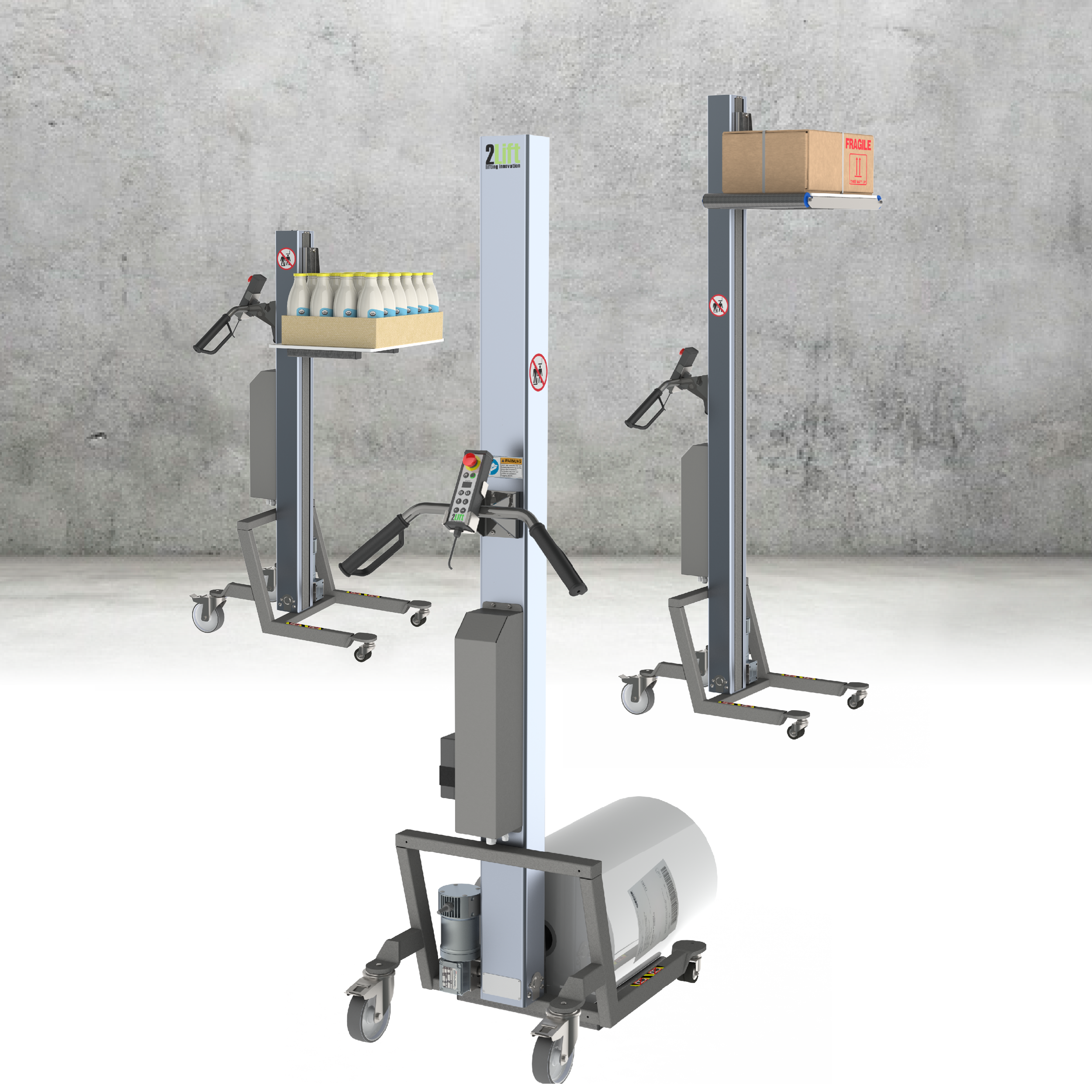
At 2Lift, we offer three categories of handling equipment: manipulators (available in both electric and manual versions) and non-manipulators.
For more detailed information about each type of lifting tool, please follow the links below. For a broader overview of all types of lifting tools, please continue reading.

Electrical Manipulators
Electrical manipulators are lifting tools that in themselves can be turned, swung or otherwise moved electrically to help position the load.

Manual Manipulators
Manual manipulators are lifting tools that in themselves can be turned, swung or otherwise moved by hand to help position the load.

Non-Manipulators
Non-manipulators are simple lifting tools that support a load. Typically designed to accommodate a specific type of load, these tools are found in countless different versions.
How Do the Three Types of Lifting Tools Work?
Besides the potential for load manipulation, the key differences between these three types of handling equipment lie in their power source and assistance.
The differences can be summed up in this way:
– Power source: the means (power source) by which the lifting tool performs its function – whether by electrical power or through human effort.
– Power assistance: the extent of technological or electrical assistance required to operate the lifting tools including elements such as motors, programming, actuators, switches, sensors etc.) required to operate the lifting tool. This also determines the level of physical involvement needed from the operator.
Share:
Exchangeable Battery
Electrical Manipulators: